

52 Ancestors in 52 Weeks: Week 1 – An Ancestor Ancestors I Admire
Prompt: Many people begin their family history journey in order to feel more connected to their ancestors. Who is someone in your family tree you admire? It could be a parent, grandparent, or someone further back in the tree.
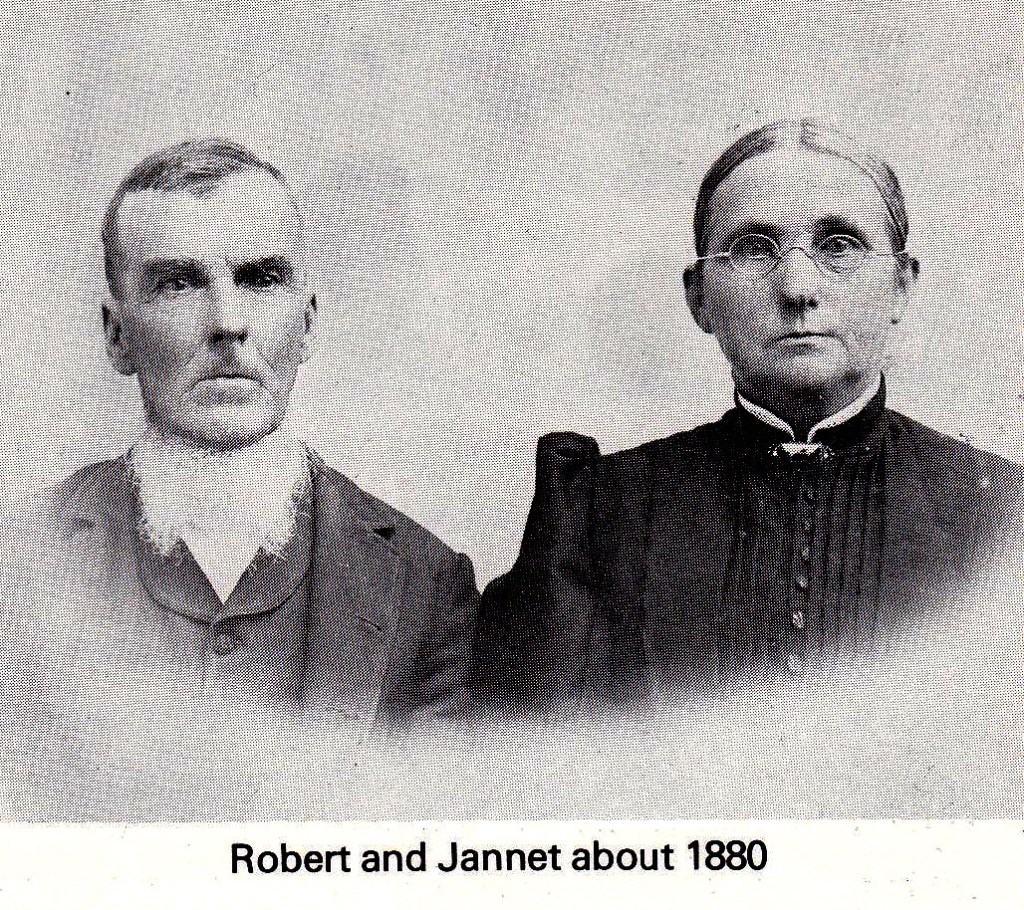
How Robert Beattie Cathcart and Janet White Mathews Cathcart—my 2nd great grandparents—met the many challenges presented to each of them in their long lives, I cannot begin to imagine.
I know that their strong faith sustained them, but I suspect that adherence to the principles of their Scottish Covenanter backgrounds created its own challenges, particularly for the young Robert.
John and Mary Harper Cathcart—Robert’s parents—immigrated to America from Ireland with their two children in 1816. Five more children, including Robert, were born in South Carolina where they settled and farmed. In 1847, Robert, his parents, and all his siblings and their spouses left South Carolina to settle in Randolph County, Illinois, with others from their Scottish Covenanter church.
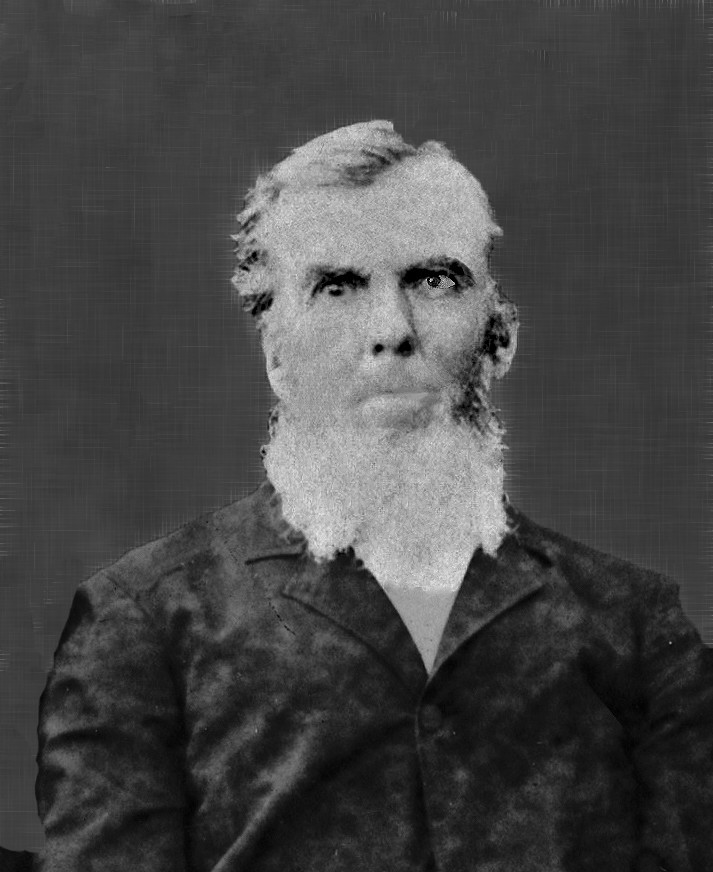
(1820-1900)
The Covenanter Church had taken a stand on the issue of slavery in 1800, far earlier than other denominations. It subsequently forced its slave-owning members to release all slaves or face exclusion from Communion.
For that reason, I suspect that the Cathcarts and the other Covenanter families who had taken up farming in their new home did not own slaves (I have found no documentation indicating that the Cathcarts did.) I also presume that, without slave labor, it would have been difficult for a farmer to compete in terms of production and pricing with slave-owning farmers in the area.
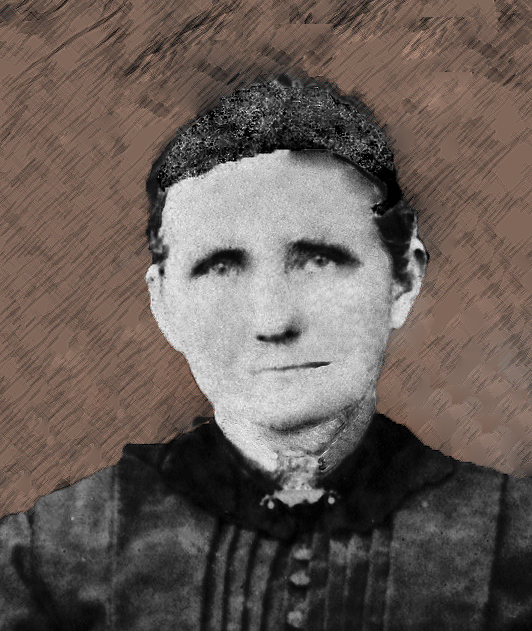
Whether it was to be able to practice farming on a more even “playing field,” the growing division in the country surrounding the issue of slavery and a desire to live in a place where holding slaves was not the norm, or other reasons, Robert’s parents and all their children and spouses left for a home further north in 1847. They settled in a large Covenanter community in Randolph County, Illinois.
Janet Mathews was born in Ballymoney, County Antrim, in Northern Ireland, in 1831. She, her parents, and her nine siblings left Ireland and relocated to Randolph County about eight years before the Cathcarts arrived there.
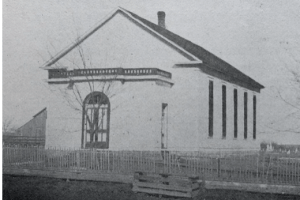
Robert and Janet and their families were members of the Old Bethel Reformed Presbyterian Church near Sparta.
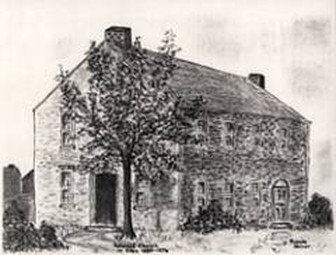
where the Mathews and Cathcart families worshipped.
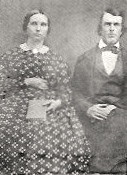
on their wedding day.
The couple were married on January 23rd, 1851.
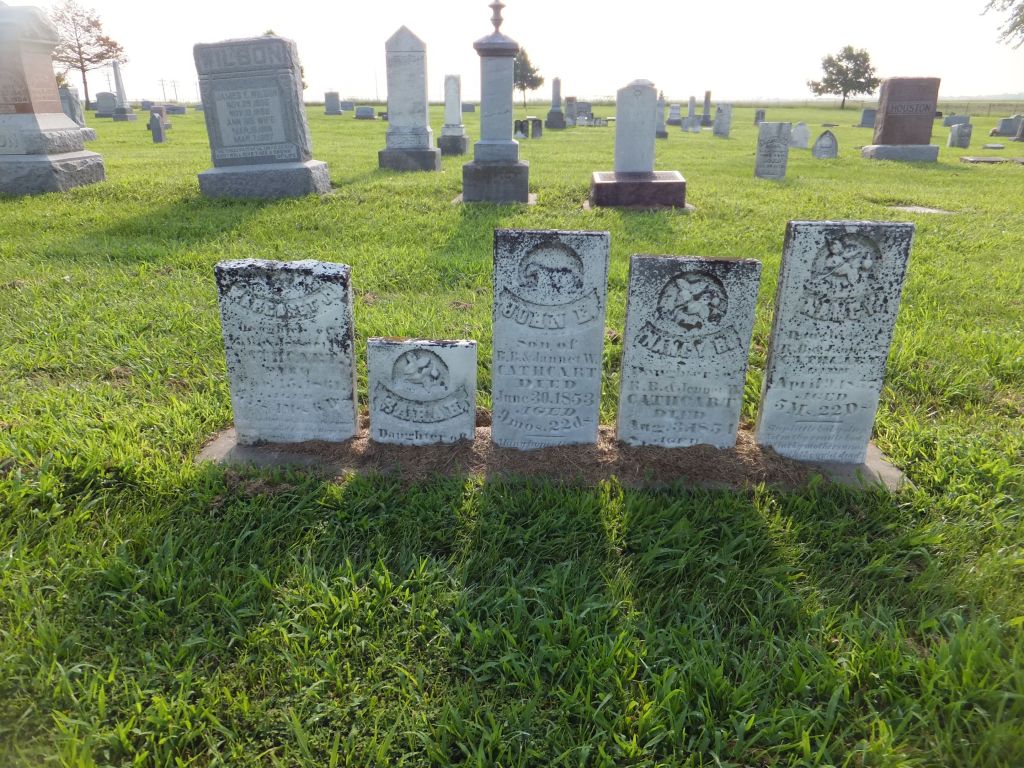
The couple experienced profound loss during the early years they spent in Illinois. Jennet lost all but one of the first six children they had, most of them in infancy. Four additional healthy children were born and then, in 1868, the family of seven moved to Winchester, Kansas.
Two more healthy children were born to the couple—and a child was adopted—in Kansas. The couple were charter members of the Winchester Reformed Presbyterian Church, and Robert was chosen for the office of Ruling Elder. He faithfully served in that position for 32 years. The church provided community as well as a place of worship.
I single out these two ancestors as ones I greatly admire for several reasons:
Each of these ancestors made major moves not once but twice.
- Janet and her family emigrated from Ireland.
- Did she even speak English?
- How long of a trip was it by ship?
- What comforts might they have had on the trip if any? Were they in steerage?
- Robert and his family moved, presumably by covered wagon, about 700 miles north from South Carolina where he was born.
- How long might this journey have taken? I’ve seen estimates that travels by covered wagon could average about 15 miles per day. If there is any truth to that, that would mean the whole trip could have taken upwards of 6 or 7 weeks. And that estimate does not include any additional time for unexpected things like sickness, needed repairs on the wagon, or inclement weather.
- Did they seek shelter along the way in the homes of other Covenanter families?
- Regarding Robert and Janet’s subsequent move to Kansas:
- How must it have felt for each of them to leave their family of origin for the comparative wilderness of Kansas?
- Was it daunting to simultaneously get settled in a new home while also being a part of forming a brand new church and plans to build a new house of worship?
- When I remember that these relocations were undertaken without the possibility of air, train, or automobile travel, paved roads, or roadside amenities, I admire their bravery, tenacity, and sheer physical effort even more.
They mourned the loss of five children.
- While my research has shown me just how common stillbirths, deaths in infancy, and even the death of the mother following childbirth were at this time in history, particularly in rural areas such as where my ancestors lived, my 2nd great grandmother lived through this devastating experience more than a few times.
- Family historians have indicated that she “never got over” the deaths of those children.
I so respect that these ancestors, despite understandable grief, moved on, literally, in the face of such devastating loss.
Robert and Janet each lived long lives: Robert lived to 79, and Janet lived to 83. Despite the couple’s hardships, they lived to see their children grow to adulthood and have their own children.
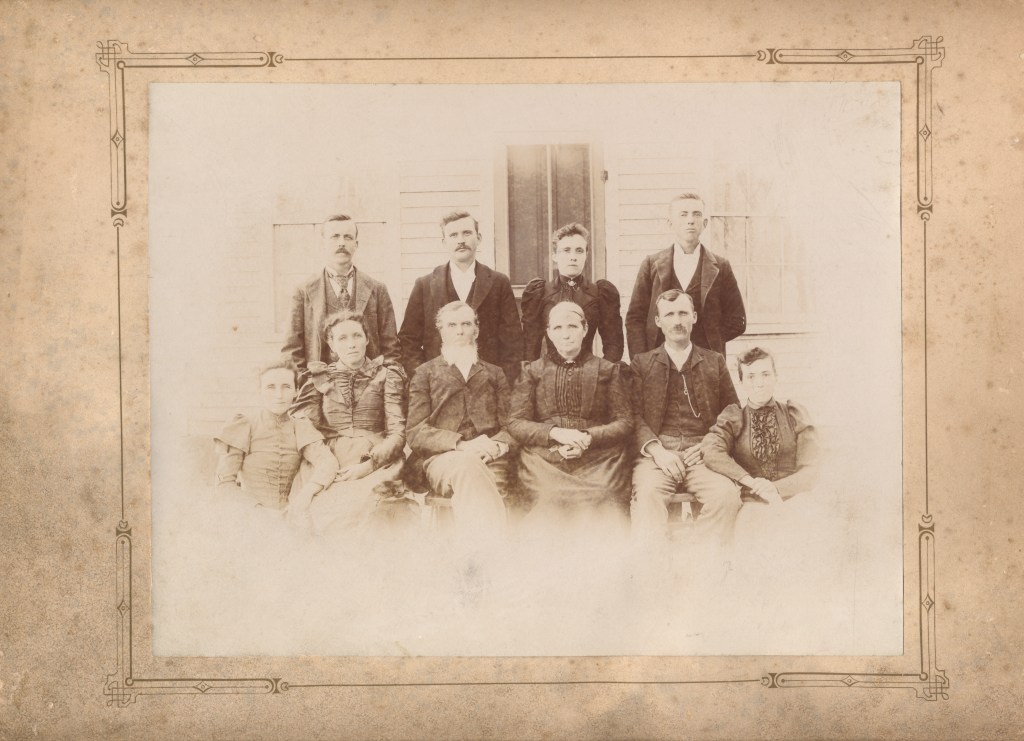
Robert and Janet Cathcart and their children in 1895.
 Talking Leaves